










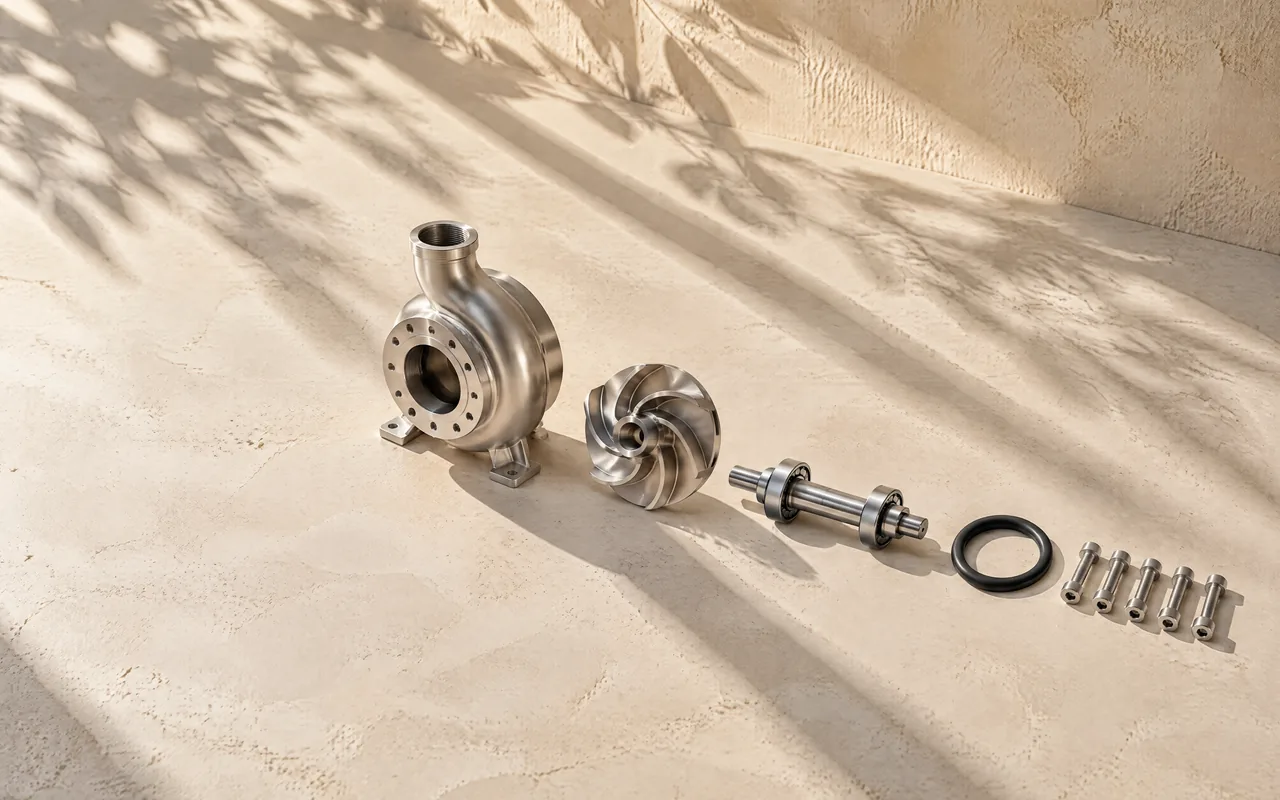

AI product photography: AI can build the scene. The product has to stay true.
AI product photography
AI can build the scene. The product has to stay true.
AI product photos and videos are allowed in Google Shopping, on Amazon and on marketplaces such as Skroutz, on one shared condition: they must show exactly the product the customer receives. AI is good at the background, the scene, the light, the motion and the resolution; it may not change the colour, the material, the shape or the label. Google also asks that the mark saying an image was made with AI stays inside the file. Here is what each platform accepts, how video now fits in, when a real or a virtual shoot is still needed, and a check for your own images.
Tell us about yoursKey facts
- IPTC
- Google requires images made with generative AI to carry the IPTC DigitalSourceType mark inside the file, and not to strip it, including from images made with its own Product Studio.Google Merchant Center Help
- 10
- videos per product are now accepted by Google Shopping, 6 to 240 seconds each. Since 30 June 2026 they show in AI Mode, free listings and ads.Google Merchant Center Help
- 1000 px
- is the minimum the product itself must measure in at least one dimension on Skroutz, Greece's largest marketplace, with no watermark and no border. Up to 15 images per product.Skroutz XML feed specification
- 31.1.2027
- From this day Google disapproves product images below 500 × 500 pixels in every category. It recommends about 1500 × 1500.Google Merchant Center Help
Last updated:
What the image shows must arrive in the box.
None of the three platforms bans AI. All of them ban the same thing: an image that shows something other than what the customer buys. Google puts it plainly: the image must show the exact item, with a separate image for each variant, in the right colour, finish and material.
In practice AI may change what surrounds the product: background, scene, light, shadow, resolution. It may not change the product itself, or add items that are not part of the purchase. In the EU an image that shows a different product from the one delivered is also a misleading commercial practice.
Allowed
Removing or replacing the background, a lifestyle scene, corrected light, higher resolution, the same product in other settings, a moving camera and moving light.
Not allowed
Another colour, material or shape, a "corrected" label, accessories not sold with it, text, prices, store logos or watermarks on the image.
The label
AI tools often distort lettering, especially non-Latin scripts such as Greek. Every word on the pack is checked against the real product before the image goes up.
Google Shopping: allowed, as long as the file says so.
In Merchant Center, images made with generative AI must carry the IPTC DigitalSourceType mark inside the file, with a value such as TrainedAlgorithmicMedia (made by a model) or CompositeSynthetic (a composite with synthetic elements). It applies to the main image, additional images and lifestyle images. Many editors and compression plugins strip this data when they re-save an image: that is where the mark is usually lost.
The same goes for text: titles and descriptions written by AI are declared with the structured_title and structured_description attributes. Otherwise an AI image is judged like any other: a clean view of the product, filling 75 to 90% of the frame, with no text, badges, borders or products not sold with it.
Product Studio
Google's AI tool inside Merchant Center, available in 30 countries including much of Europe: it removes backgrounds, builds a scene from a description and increases resolution.
Size
At least 500 × 500 pixels from 31 January 2027, up to 64 megapixels and 16 MB. About 1500 × 1500 is recommended.
Automatic improvements
Google can improve images itself, for example remove overlays or enlarge small images; the setting is in Merchant Center.
Amazon and marketplaces: the main image is a photograph.
Amazon is the strictest on the main image: a real photograph of the product on a pure white background, with no text or graphics, the product filling almost the whole frame. AI has room in the additional images and in advertising: Amazon itself gives advertisers tools that build lifestyle scenes and videos from a product's details.
Skroutz, Greece's largest marketplace, downloads images from your feed and makes its own thumbnails. It asks for large images, with the product itself above 1000 pixels in at least one dimension, no watermark or border, not in AVIF and never a "no image" placeholder. It has no rule specific to AI; the general one applies: the image shows the product on sale.
Amazon, main image
White background, the product alone, no drawing or scene. A main image outside the rules can hide the product from search.
Amazon, the rest
Scenes of use, details, dimensions: this is where AI images fit, always with the product unchanged.
Skroutz
Up to 15 images per product, additional images required in fashion. Your server must let "Skroutz ImageBot" download them. The feed has no field for video.
Check a product photo before Google sees it.
Drop an image here. The check reads its size, format, the AI mark inside the file, the background and how much of the frame the product fills, and compares them with the rules of Google, Skroutz and Amazon.
The image is not uploaded anywhere: it is read only in your browser.
The result appears here.
For each channel: what passes, what needs attention and what fails, with the reason.
The samples come from the Κουρούπι study, a fictional Noria product; both images were made with AI and carry the mark. The check cannot see text or logos on the image, or whether the product matches the real one: those need an eye.
Product video now reaches Google Shopping too.
Since 30 June 2026 Google Shopping shows product videos you send with Merchant Center's video_link attribute: up to 10 per product, from YouTube or as a direct file. They appear in AI Mode, in free listings and, with Google Ads linked, in Performance Max and Demand Gen campaigns. A video that fails review does not take the product down; it simply does not show.
AI now makes a short video from a single photograph, on the same condition as images: what surrounds the product moves, not the product itself. When AI "turns" a product, it invents the sides it never saw. For a 360° turn the right material is a 3D model or a real shot on a turntable.
Google, video_link
6 to 240 seconds, up to 500 MB, 9:16, 16:9 or 1:1, at least 720p, MP4 or MOV. You need the rights to use it in ads, and Googlebot must reach the file without signing in.
Changing a video
A new video at a new address is read in 1 to 3 days; a changed file at the same address can take up to 6 weeks.
Amazon
Amazon Ads' Video Generator makes short ad videos from a product image at no cost, in the US, the UK, Germany, France, Italy, Spain and other markets.
On your own shop
Video on the product page with VideoObject structured data, so it can also appear in Google's video results.
What moves
The camera, light, water, steam, fabric in the wind, a hand reaching for the product. Not the label, not the shape.
One true shot. Every other image made from it.
AI works best when it starts from a real photograph of the product and is asked to change only what is around it. Asked to imagine the product itself, it produces something convincing but rarely exact: a slightly different colour, another texture, other letters on the label.
So the photo shoot does not disappear; it gets smaller. One clean shot per product and variant, on white and from the angles that matter, becomes the source of the scenes, the videos and the ad images. Where variants are many, virtual photography from a 3D model gives every colour and angle without another shoot.
From 2 August 2026 the EU AI Act requires AI tools to mark the images and videos they make in a machine-readable way. For an online shop the practical consequence is simple: the mark must not be stripped along the way, from editing to compression to upload. No visible label on the image is required.
Real photography
The main image, and products where texture or colour decides: fabrics, jewellery, food, wood, ceramics.
Virtual photography (3D)
A 3D model of the product, lit and photographed as in a studio: every colour, every angle, a 360° turn and AR on phones.
AI scenes and video
From the real or virtual shot: scenes of use, seasonal images, videos for Google, ads and social media, without a new shoot.
The mark in the file
IPTC DigitalSourceType for Google, and Content Credentials (C2PA), a signed history of the image. Both get lost in optimisation plugins and format conversions; check them on the final file.
The dates that matter to an online shop.
- 12.2024
Google's Product Studio, with AI scenes, background removal and higher resolution, reaches 30 countries, Greece among them.
- 14.4.2026
Merchant Center accepts product videos (video_link) and warns about images below 500 × 500.
- 10.6.2026
The European Commission publishes the final code of practice on marking AI-generated content.
- 30.6.2026
Product videos appear in Google Shopping, AI Mode and ads.
- 2.8.2026
The transparency obligations of Article 50 of the AI Act apply, machine-readable marking of AI images and video among them.
- 31.1.2027
Merchant Center disapproves product images below 500 × 500 pixels.
Before you upload your first AI image.
In the order that matters.
Keep a real or virtual (3D) shot of every product and every variant, on white, as the main image.
Build AI scenes and videos from that shot, asking for nothing on the product to change.
Compare every image with the product: colour, material, shape, every letter on the label.
Check that the IPTC mark survives in the file your site and feed actually serve.
Make images at least 1500 pixels on the long side, with no text, border or watermark, and not in AVIF for marketplaces that refuse it.
Send 1 to 3 short videos per key product to Merchant Center with the video_link attribute.
Let Googlebot-Image and marketplace bots such as Skroutz ImageBot download your images and videos.

Real and virtual photography, AI scenes and video.
We photograph products on white and in the light of your own space, and build 3D models that are photographed as in a studio. From these shots we make AI scenes and videos with the product unchanged, and deliver every file with the AI mark inside it, ready for your shop, Google, Amazon and marketplaces.
Shot plan
Which images and videos each channel needs, and which must be photographs.
Real photography
Every product and variant on white, from the angles that matter.
Virtual photography
A 3D model for catalogues with many variants: every colour and angle, a 360° turn and AR.
AI scenes
Built from the real shot, with every detail checked before upload.
Product video
Short videos that loop without a seam, in the formats of Google Shopping, ads and social media.
Marked files
Sizes and formats for every channel, with the AI mark inside the file.
The questions we hear most often.
Yes, as long as they show exactly the product for sale and carry the IPTC DigitalSourceType mark inside the file saying they were made with AI. Google asks that the mark is not removed, including from images made with its own Product Studio.
Amazon's main image must be a photograph of the real product on a white background. AI images fit the additional images and advertising, where Amazon offers its own tools for scenes and video.
Yes. Since 30 June 2026 Merchant Center accepts up to 10 videos per product with the video_link attribute, from YouTube or as a direct file, 6 to 240 seconds long and at least 720p. They appear in AI Mode, free listings and ads.
From a real or virtual photograph of the product, asking the AI to move the camera, the light or the scene, not the product itself. A 360° turn needs a 3D model or a real shot, because AI invents the sides it never saw.
A 3D model of the product, lit and photographed as in a studio. It gives every colour, every angle and a 360° turn without another shoot, and the same model shows the product in AR on a phone.
Not of the product itself, not accurately: colour, texture and label lettering usually change. AI works properly when it starts from a real or virtual shot and changes only the background and the scene.
No. The mark goes inside the file, not on the image, and Google does not accept text on product images. What matters is not to strip the mark the tool adds.
From 2 August 2026 the AI Act requires AI tools to mark the images and videos they make in a machine-readable way. For a shop, the practical duty is to keep that mark in the file and to show the product as it really is.
For Google at least 500 × 500 pixels from 31 January 2027, with about 1500 × 1500 recommended. For Skroutz, the product itself above 1000 pixels in one dimension. An image of 1500 pixels or more, with the product filling the frame, covers every channel.
Sources
- Google Merchant Center Help: AI-generated content (IPTC DigitalSourceType, structured_title)
- Google Merchant Center Help: image_link requirements
- Google Merchant Center Help: product videos, the video_link attribute
- Google Merchant Center Help: where product videos appear
- Google Merchant Center Help: product data specification update 2026 (video, 500 × 500)
- Google Merchant Center Help: Product Studio in 15 new countries
- Google Merchant Center Help: automatic image improvements
- Google Search Central: video structured data (VideoObject)
- Skroutz: XML feed specification (images, Skroutz ImageBot)
- Amazon Seller Central: product image requirements
- Amazon Ads: AI image generation for advertisers
- Amazon Ads: Video Generator
- European Commission: code of practice on marking AI-generated content (AI Act Article 50)
- EUR-Lex: Directive 2005/29/EC on unfair commercial practices
Facts last checked:
Goes with
Related guides
- Skroutz & marketplacesOne catalogue for Skroutz, Google Shopping and Amazon, with prices and stock right.
- Shopping inside ChatGPT & GeminiWhen the customer's AI assistant buys: what changes, where it already works, how a shop gets ready.
- Visibility in ChatGPT & AIRecommended by ChatGPT, Gemini and Google's AI answers.